


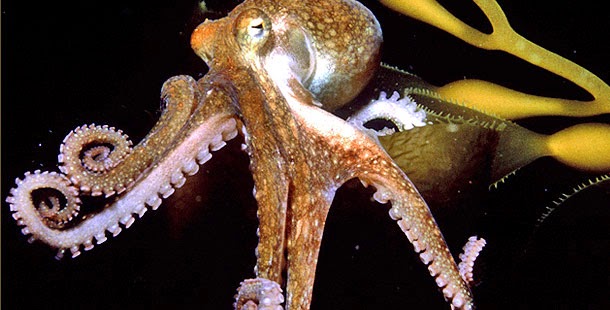
 These slippery creatures are armed with hundreds of powerful suckers that line their eight tentacles, which have the dual senses of taste and touch. The pressure from these same suckers is capable of tearing flesh.
By employing foresight, planning, and even tool use, octopuses can perform amazing feats of dexterity and agility. They use rocks and jets of water as tools, and are known to use coconut shells to hide from predators.
Don’t take our word for it. Watch this octopus escape from inside a closed jar:
These fast swimmers jet forward by expelling water through their mantles. When cornered in a tight spot, they can squeeze into impossibly small cracks and crevices where predators can’t follow. If all else fails, an octopus can lose an arm to escape a predator’s grasp and re-grow it later with no permanent damage.
Sources
http://kids.nationalgeographic.com/animals/octopus.html
http://www.encyclopedia.com/topic/octopus.aspx
http://www.onekind.org/be_inspired/animals_a_z/octopus/
http://www.allthesea.com/Octopus.html
http://www.orionmagazine.org/index.php/articles/article/6474