

We had a big day for big game! – not marine species, but proceedings that offer some interesting observations on how CITES works, and its true mission. While I’m a champion of marine life, I love the natural world, I care about all species, and some of my favourites were being discussed so I was on the edge oy my seat…
Imagine a cute little gazelle bouncing around the grassland on dainty legs, but with one hell of a honker – a giant inflatable snout like an elephant seal! Meet the saiga. They look like they are designed as extras for the starwars set, but actually these endearing antelope once roamed most of the north northern hemisphere from Europe to Alaska. Humans have hunted them since the ice end. Under the strict rules of the Soviet Union hunted was controlled, but in the years since, this species has frequently been on the brink. Like most species they lose habitat to domestic livestock, which can also spread disease, and their range is broken by roads and fences. But the biggest threat is poaching. Males are targeted so that their horns can be ground down for traditional medicine in parts of Asia.
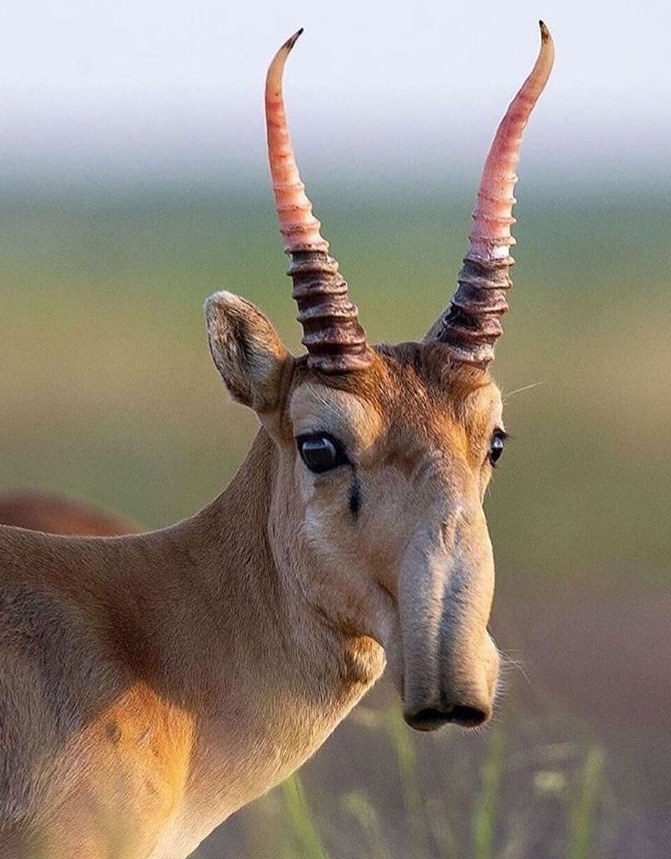
Saiga were adopted into CITES Appendix II in 1990 to facilitate controlled trade, but in the years that followed it was reported that their global population dropped 95% just 15 years. The saiga was racing towards extinction. It was labelled critically endangered on the IUCN red list, and in 2019 an annotation was added to CITES Appendix II, a ‘zero export quota for wild specimens traded for commercial purposes’. An attempt to help them recover.
Saiga are true survivors. Like rabbits of the antelope world, their population has increased tenfold in a decade – this is a species that can quickly bounce back, but while its population has increased, so has demand. Its market price has risen, and as we result, so has the black-market trade.
So, at this CITES CoP, Kazakhstan proposed to open just one populations of saiga to international trade. They put together a compelling argument that careful trade will help fund conservation and developed methods to track and trace every specimen. Kazakhstan has invested more than $18 million in protecting and restoring the saiga, a huge conservation victory, and now they are asking to be able to control trade, to bring down the market value, make every step easier to police and to put money into stamping out illegal trade. It’s the kind of suggestion that works for CITES. CITES is not about ending the exploitation of plants and animals, it’s about using natural resources sustainably.
And so, when it went to vote, Kazakhstan was commended for their efforts, and their proposal adopted. This is conservation and trade working hand in hand.
However, it made me a little nervous. It was a good, logical argument, but if it’s allowed for one country and one species, why not others. Next on the agenda were discussions about controlled legal trade of giraffes, white and black rhinos and elephants.
The arguments were impassioned and powerful. Rage states, like South Africa and Namibia shared stories about the huge costs of protecting rhinos and elephants, and the dangers that go with it, with landowners putting the lives on the line for their animals. I really felt for them and felt so grateful for the efforts they have made. But we also heard the counter arguments, about the huge risks that opening legal trade in rhino horn and elephant ivory would just increase demand and make it easier for illegal products to be smuggled on the black market. Really the situation is not that different to the saiga, except these very special and iconic species, ones that truly shape landscapes and support other species, are too close to the brink of extinction to risk. For all of these large animal species the proposals were rejected.
Some populations of rhinos and elephants are listed in Appendix II, because the populations are healthy, but while the black-market threats are so real, trade is very tightly restricted. Other populations that are perilously in decline have been listed as Appendix I, preventing any form of legal trade. This shows how the tools of CITES are applied. The ideal for CITES is to have species in Appendix II, because it means there can be trade, natural resources can be used commercially, but with strict rules and total transparent traceability. But in an ever more challenging world for wildlife, it isn’t always enough.
It’s for this reason that we are so thrilled to see iconic marine species making it to Appendix I. History shows time and time again that greed pushes marine industries to take more than nature can replenish, especially as there is so little law enforcement in the open ocean. Technology for tracing species gets better all the time, but for species truly under threat, a total ban is their only real hope.
Making global decisions that will benefit people, economy and nature is a near impossible task, it’s painfully slow and must navigate nations with such different challenges and needs. It is totally dependent on good science, on political will, and on watchdogs, organisations like Sea Save, holding stakeholders accountable. But this week we are seeing it working, making wise, powerful decisions. It is writing conservation poetry, a genuine source of hope. The world is backing wildlife.
Thank you for helping us be a part of this historic conference.
Best wishes,
Phil, Georgienne, Jay, and Tobias
CITES CoP20, Uzbekistan