


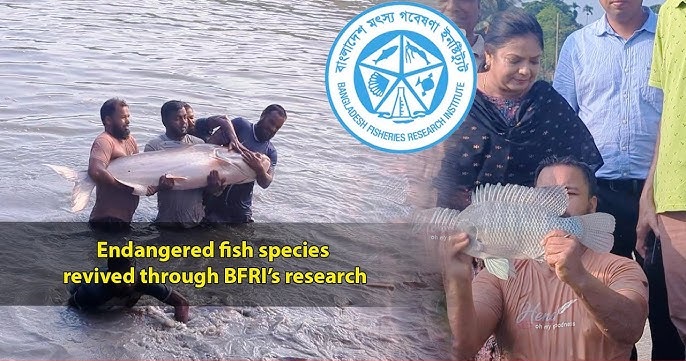
1. Bangladesh Revives Lost Fish Species—and Sparks a Blue Economy Revolution
Mymensingh, Bangladesh – A wave of innovation is transforming Bangladesh’s fisheries under the leadership of the Bangladesh Fisheries Research Institute (BFRI). Since 1984, the institute has championed efforts to restore more than 18 endangered native fish species—among them tengra, pabda, gulsha, and mahashol—while pioneering genetic breakthroughs like the high-yielding “Subarna Rui” and a disease-resistant koi vaccine.
Operating research hubs in Chandpur, Khulna, and Cox’s Bazar, BFRI also drives marine sustainability through seaweed, eel, and crab farming, helping boost coastal livelihoods. Its conservation of hilsa, the national fish, has increased production by 50 percent through new sanctuaries and jatka protection. Beyond fish, innovations such as the Mechanical Fish Dryer and Live Gene Bank anchor the institute’s role in achieving the United Nations’ SDG 14 for the conservation of aquatic resources, propelling Bangladesh toward a thriving Blue Economy.
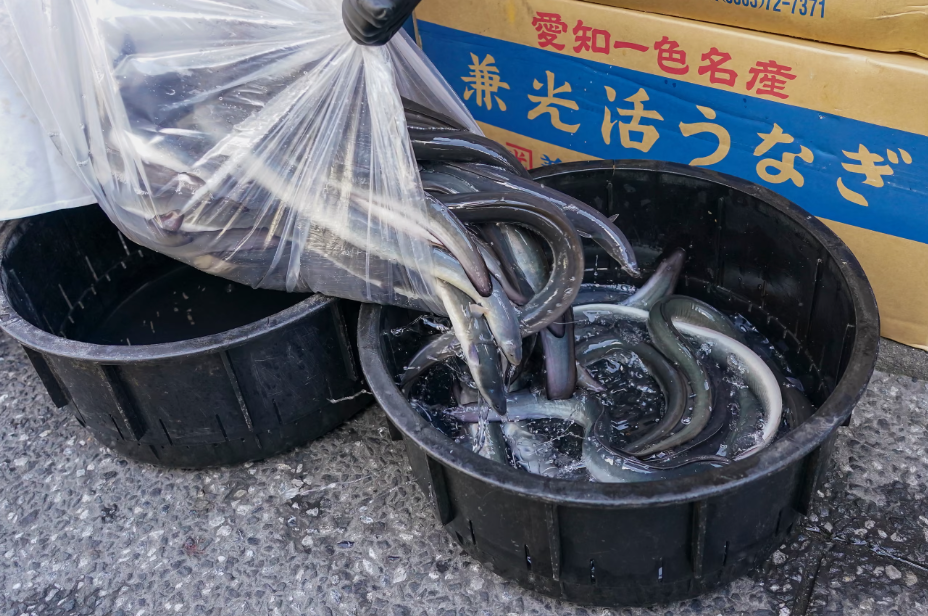
2. Europe’s Billion-Euro Illegal Eel Trade Is Pushing a Species to Extinction – One Side of the Coin
London, United Kingdom – Wildlife detectives are battling a billion-euro black market thriving beneath Europe’s waters. New revelations from Europol and conservation group TRAFFIC expose the illegal glass eel trade as one of the world’s most profitable wildlife crimes, generating up to 3 billion euros annually. Across the continent, traffickers smuggle millions of juvenile eels—critically endangered Anguilla anguilla—to Asian aquaculture farms, where they grow into the delicacy unagi.
Authorities seized more than one million live eels in Europe last year alone. Experts describe the network as a complex web of document fraud, money laundering, and biological know-how designed to keep tiny, translucent eels alive through international transit. With eel populations down 90 percent since the 1970s, ecologists warn this hidden trade is pushing the species toward extinction and disrupting vital freshwater–marine ecosystems across Europe.
Thank you for your generous gift that will help us continue the production of this weekly, free publication
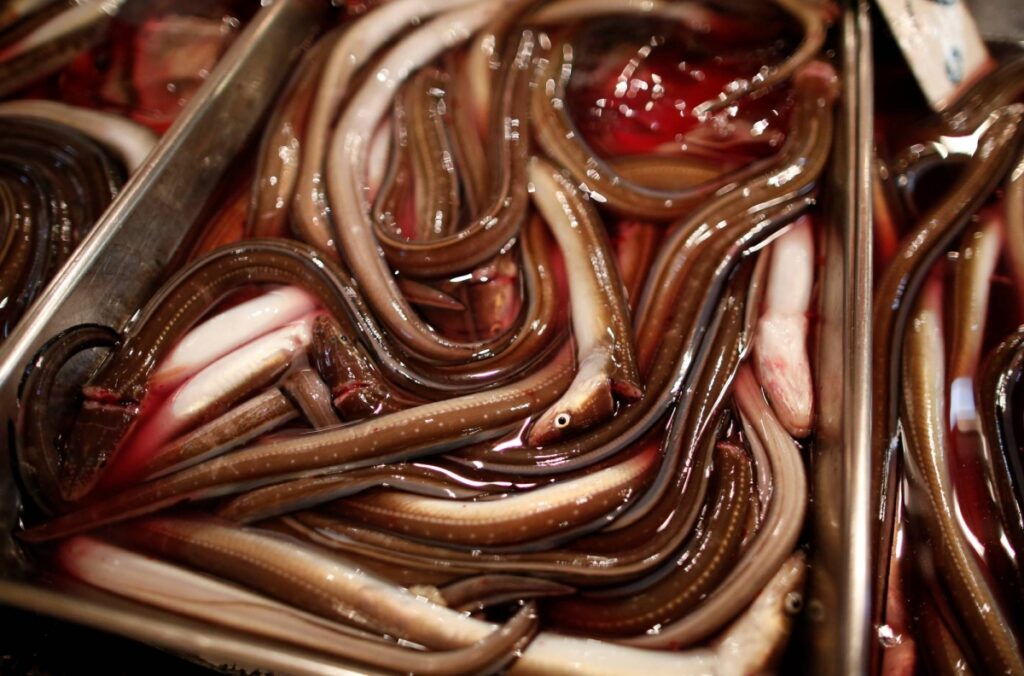
3. … And the Other Side of the Coin – Japan Fights International Push to Regulate Eel Trade and Protect Species
Tokyo, Japan – Japan is mounting strong opposition to proposed international trade restrictions that would place all eel species, including the Japanese eel, under the Convention on International Trade in Endangered Species of Wild Fauna and Flora (CITES). The proposal, backed by the European Union and conservation groups, aims to curb illegal trafficking and species decline by requiring export permits for eel trade starting as early as 2027.
Japanese Fisheries Minister Shinjiro Koizumi pledged efforts to block adoption at the November CITES meeting in Uzbekistan, arguing that Japanese eel populations are stable and that restrictions could harm imports and domestic aquaculture, which depends on juvenile glass eels from abroad. Japan is working with allies China and South Korea to oppose the measures, even as the CITES secretariat stresses the necessity of regulations to prevent illegal trade and ensure sustainable eel conservation worldwide.
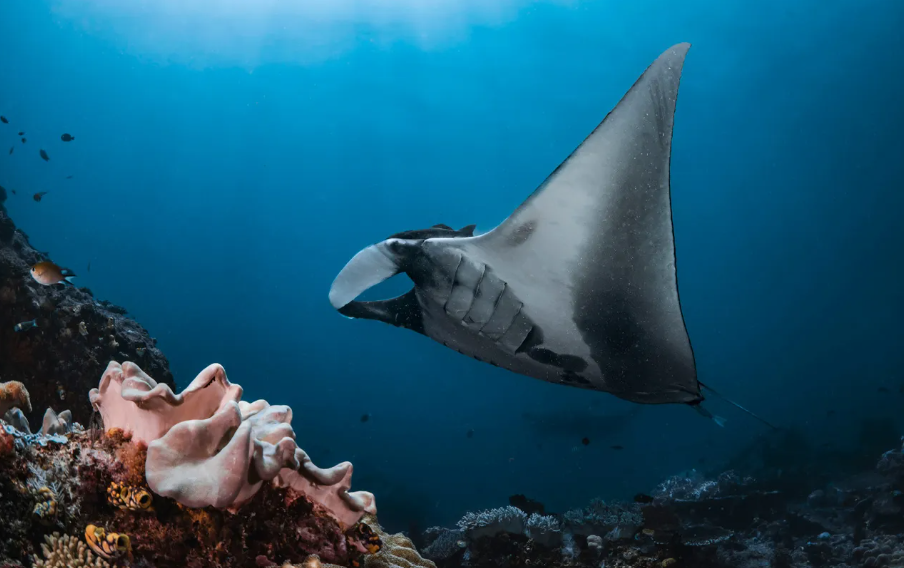
4. Saving the Giants of the Sea: New Collaborations Boost Manta Ray Survival
Pacific Ocean – Marine ecologists from Duke University and tuna fishers have jointly developed an innovative manta ray sorting grid to protect vulnerable manta and devil rays caught as bycatch in tuna purse seine nets, a leading cause of accidental manta deaths worldwide. The stainless steel device, inspired by fishers’ bamboo designs, gently holds the large rays flat and allows speedy release back into the sea, drastically reducing injury risk.
Trials over two years on 12 fishing vessels showed the grid efficiently safeguards rays weighing as much as a car while easing crew safety. With over 13,000 threatened manta and devil rays caught annually during tuna fishing, this breakthrough promises a practical, low-cost conservation tool that benefits both marine life and fishing communities. Conservationists urge a rapid scale-up of this technology to help preserve key reproductive females vital for species recovery.
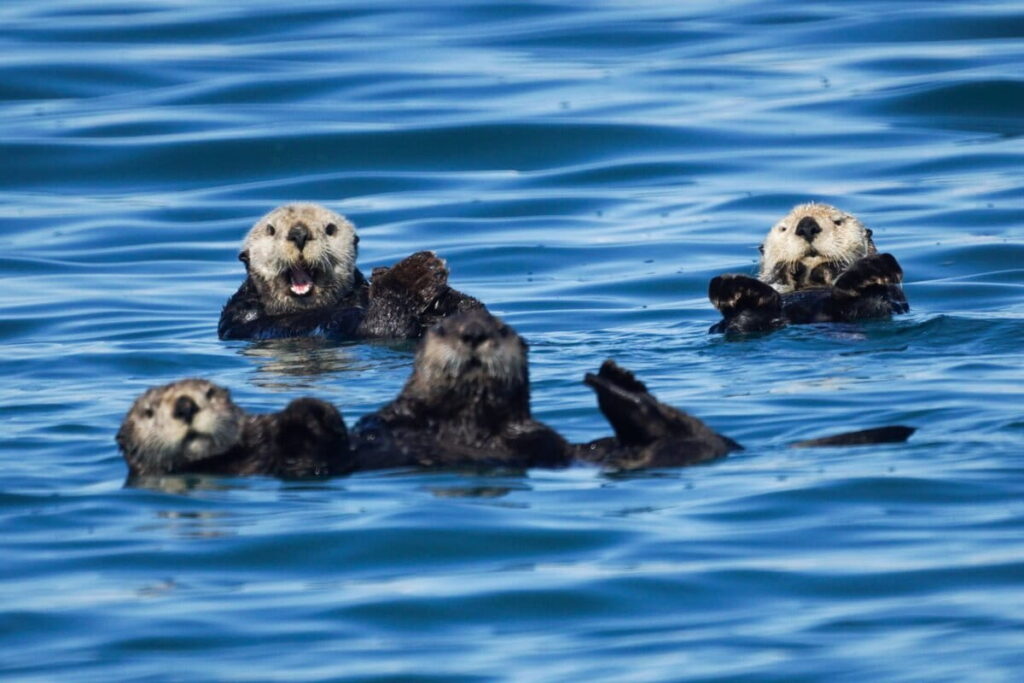
5. Booming Sea Otter Numbers in Alaska Create Ecological and Economic Tensions
Homer, Alaska – Northern sea otter populations in Alaska’s Gulf region have surged to about 70,000, recovering from near extinction due to early 20th-century hunting. While otters help restore vital kelp forests by controlling sea urchins, their voracious appetite for shellfish—including clams and crabs—has sharply reduced local shellfish stocks, troubling commercial and Native Alaskan harvesters.
Strict federal laws restrict otter hunting to Native Alaskans who meet narrow blood quantum criteria, limiting broader tribal management efforts. Protective measures like otter-proof netting show promise for preserving shellfish beds, but cover limited areas. Experts highlight the need to balance ecological benefits with community needs by restoring Native authority over sea otter management. Collaborative plans aimed at sustainable population control, combining traditional knowledge and science, seek to settle this complex issue in Alaska’s rich coastal waters.
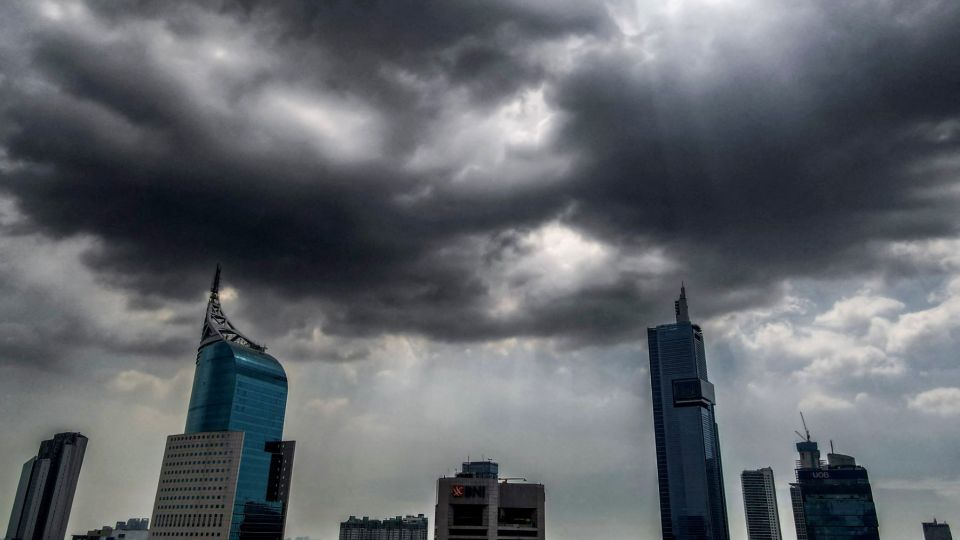
6. Insidious Pollutants: Microplastics Floating in Jakarta’s Air, Water
Jakarta, Indonesia – A 2022 study by Indonesia’s National Research and Innovation Agency (BRIN) reveals that Jakarta’s rainwater and air are contaminated by microplastic particles originating from urban and industrial activities. Found in every rain sample collected across the city, these tiny plastic fragments result from the breakdown of synthetic fibers in clothing, vehicle tire dust, plastic waste burning, and degraded plastics in open areas.
On average, about 15 microplastic particles per square meter fall with rain each day in coastal Jakarta. These particles, smaller than regular dust, pose health risks as they can be inhaled or enter the food chain through water contamination. The findings serve as a stark environmental warning, prompting Jakarta’s officials to enhance plastic waste management and reduce single-use plastics. Collaborative efforts are underway to monitor and mitigate this silent pollutant, which threatens both the ecosystem and public health.
7. Climate Change Is Killing Ocean Greenness and Marine Life, New Research Shows
Beijing, China – The world’s oceans are showing a significant decline in greenness, a key indicator of marine life, due to global warming, according to a new study by researchers from Tsinghua University. Analyzing daily chlorophyll levels from 2001 to 2023, the study reveals an annual decline of 0.35 micrograms per cubic meter, with faster declines near coastal areas and river estuaries.
This greenness loss primarily reflects shrinking phytoplankton populations—tiny marine plants that form the base of ocean food webs and play a vital role in absorbing carbon dioxide. Warming surface waters create stronger thermal layers that limit the upward flow of nutrients needed for phytoplankton survival. The weakening biological carbon pump threatens biodiversity and fisheries while reducing the ocean’s capacity to sequester carbon by 32 million tons annually. Scientists urge careful management of coastal ecosystems and accelerated climate action to protect these crucial marine systems.
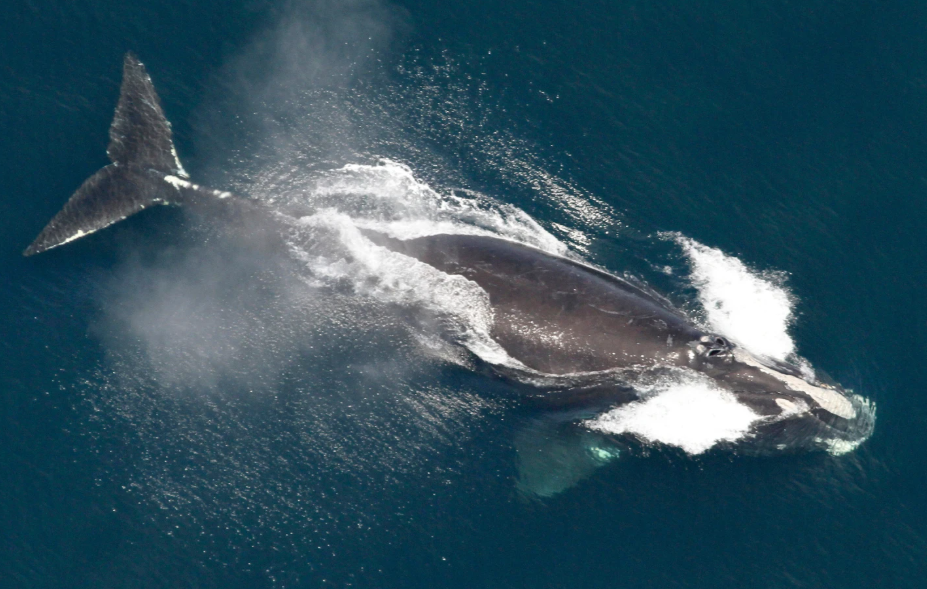
8. North Atlantic Right Whale Population Shows Slow but Hopeful Growth
Boston, Massachusetts – The critically endangered North Atlantic right whale population has shown a slight increase, reaching an estimated 384 individuals in 2024, a 2.1% rise from 376 the previous year, according to the North Atlantic Right Whale Consortium. This marks a positive trend after years of decline, driven by fewer mortalities and injuries alongside the birth of new calves.
Scientists remain cautiously optimistic but stress the need to maintain strong protections against threats such as ship strikes and entanglement in fishing gear. Continued conservation efforts and adaptive management will be essential to sustain this gradual recovery and safeguard the species from extinction.

9. Tasmanian Activists Stage Dead Whale Crime Scene to Protest Industrial Krill Fishing
Hobart, Tasmania – Environmental activists in Tasmania staged a striking “dead whale crime scene” demonstration to condemn industrial krill fishing and its threat to whale populations and marine ecosystems. The protest highlighted scientific concerns that commercial krill fishing, concentrated in critical whale feeding grounds, risks depriving baleen whales of essential food.
Activists called for stricter regulations and expanded marine protected areas to ensure sustainable krill harvests while safeguarding recovering whale species such as humpbacks and blues. The demonstration also raised awareness of the dangers of entanglement and ship strikes faced by whales amid increasing fishing vessel activity. Ocean conservationists urge a balanced approach to krill fisheries management to preserve the delicate ecological relationships in the Southern Ocean.
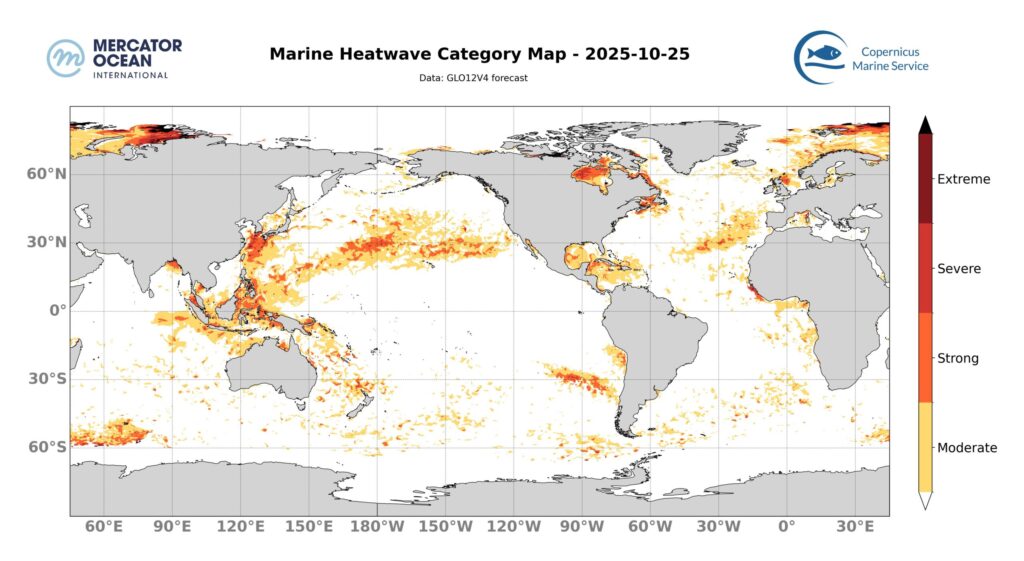
10. Marine Heatwave in Gulf of Mexico Easing; New Heatwave Developing off Chile
Mercator Ocean International’s latest marine heatwave bulletin (25 October 2025) reports that the severe marine heatwave in the Gulf of Mexico and Caribbean Sea is decreasing in intensity, now mostly moderate. The marine heatwave around 30°W is expanding but remains moderate overall. The heatwave in the center of the Atlantic basin is contracting in area but is still moderate to strong.
In the Sea of Japan and the Yellow Sea, heatwave intensity is decreasing, while an intense heatwave is emerging over the Philippine Sea and Indonesia. Off Chile’s coast, moderate to severe heatwaves are newly developing near 15°S and 30°S. The Indian Ocean heatwave lessens in size and intensity, remaining moderate overall. These dynamic marine heatwave patterns highlight continued ocean warming variability with implications for marine ecosystems and climate.

11. NOAA Leads Deep-Sea Habitat Restoration Livestream Expeditions in the Gulf of Mexico
September-October 2025 – NOAA and partners are conducting a multi-year series of deep-sea habitat restoration expeditions in the northern Gulf of Mexico, targeting areas injured by the 2010 Deepwater Horizon oil spill. The efforts involve remotely operated vehicles (ROVs) assessing habitats, collecting sediment cores, deploying sensors, and gathering environmental data.
Several public livestreams are scheduled throughout September and October, offering viewers real-time insights into restoration activities and marine biodiversity. Topics include coral science, ocean biodiversity, and seasonal ocean changes. These expeditions highlight collaborative federal, academic, and nonprofit partnerships working to advance knowledge and active management of the Gulf’s mesophotic and deep benthic communities. Livestream recordings and schedules are available on the University of Rhode Island’s Inner Space Center YouTube channel.

12. Marine Heatwaves Disrupt the Ocean’s Carbon Conveyor Belt, Study Finds
New research published in Nature Communications shows that marine heatwaves can significantly disrupt the ocean’s biological carbon pump, a natural conveyor belt that transports carbon from surface waters to the deep sea, where it can be stored for thousands of years. The study examined two significant marine heatwaves in the Gulf of Alaska: “The Blob” (2013-2015) and another in 2019-2020.
Findings revealed that shifts in plankton populations during these heatwaves caused carbon particles to accumulate near the ocean surface and upper twilight zone, rather than sinking deeply. This blockage increases the risk of carbon returning to the atmosphere, intensifying climate change. The research highlights the urgent need for sustained ocean monitoring and collaborative efforts better to understand the complex ecological impacts of marine heatwaves.
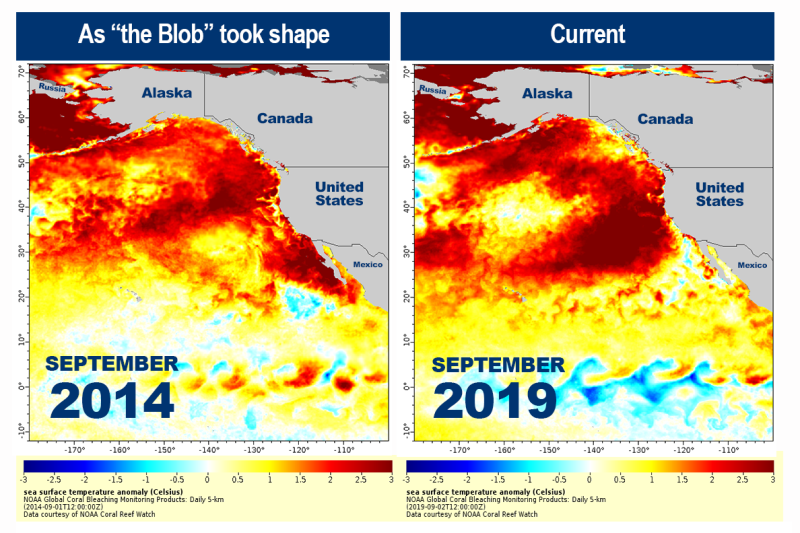
13. New Marine Heatwave off West Coast Resembles 2013-16 “Blob” Event
A marine heatwave has rapidly formed off the U.S. West Coast, stretching from Alaska to California and rivaling the size of the infamous 2013-2016 “Blob” heatwave. The new heatwave, designated NEP25A, covers roughly 8 million square kilometers and is one of the most significant events recorded in the Northeast Pacific since 1982, according to NOAA researchers. It emerged in the Gulf of Alaska in May 2025 due to a reversal in coastal winds that reduced ocean surface cooling.
While upwelling of cold water currently limits warming near the coast, the heatwave has already affected marine ecosystems, including shifting species distributions and producing harmful algal blooms along the Oregon coast. Scientists warn the event may intensify if persistent weather patterns continue but could dissipate quickly if conditions change. NOAA continues intensive monitoring to track ecological impacts and aid resource managers.
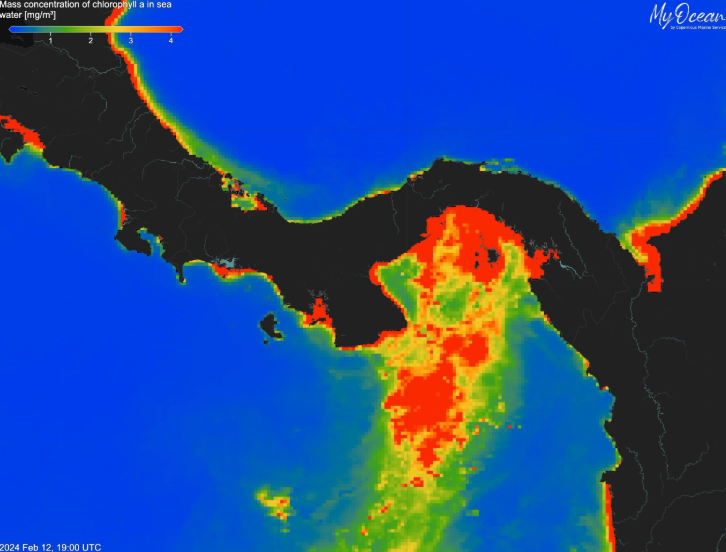
14. What Happens When Ocean Upwelling Fails? Panama Shows Us the Danger
Panama’s crucial tropical upwelling failed for the first time in over 40 years in 2025, threatening marine ecosystems and fisheries, according to scientists from the Smithsonian Tropical Research Institute and the Max Planck Institute for Chemistry. The annual upwelling brings cold, nutrient-rich waters from ocean depths to the surface, fueling plankton blooms that form the base of the marine food web and support vibrant fisheries worth $200 million annually.
This year, weakened and shortened northerly trade winds delayed and drastically reduced the upwelling period, which lasted only 12 days instead of the usual 66. The ocean surface water remained warmer than normal, causing reduced productivity and endangering coastal fisheries and coral reefs. Researchers say this unprecedented event highlights how climate change could disrupt fundamental ocean processes vital to coastal communities and marine biodiversity.

15. Ghana Approves First Marine Protected Area to Boost Fisheries and Ecosystem Resilience
Accra, Ghana — The government of Ghana has approved the establishment of the country’s first Marine Protected Area (MPA) in the Greater Cape Three Points region of the Western Region. Covering around 700 square kilometers, this critical marine zone serves as a breeding ground for sardinellas, a nursery habitat for fish, a migratory route for whales and dolphins, and a nesting site for marine turtles. The MPA aims to reverse declining fish stocks caused by overfishing, habitat destruction, and illegal fishing, while balancing conservation with sustainable fishing practices to support coastal communities.
The initiative aligns with Ghana’s Blue Economy Strategy and international agreements promoting ocean stewardship, biodiversity protection, and sustainable development. Extensive stakeholder consultations involving over 7,000 people have shaped the mixed-use management approach. The government outlined the next steps, including mapping, gazetting, community engagement, public education, and enforcement to ensure long-term success.
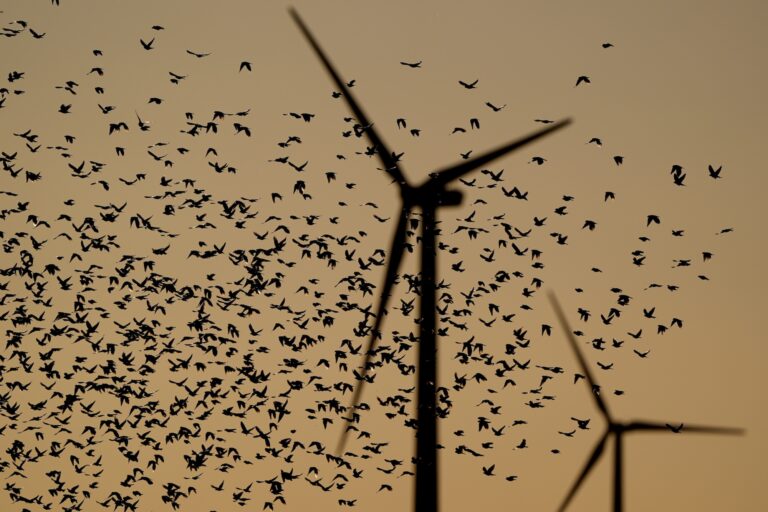
16. New Radar Study Reveals Peak Migration Risks of Songbirds From Offshore Wind Turbines
Ithaca, New York — Hundreds of millions of songbirds migrate over U.S. coastal waters in tighter time windows during spring and fall, flying lower than over land and putting many at risk from offshore wind turbines, according to a new study by the Cornell Lab of Ornithology. Researchers analyzed 10 years of radar data from 16 weather stations covering up to 75 kilometers offshore.
Findings show that 20-40% of migrating birds fly below 300 meters, the height of turbine blades, increasing collision risk. However, migration occurs over fewer nights at sea than on land, providing a practical opportunity to implement dynamic turbine shutdowns during peak migration to mitigate bird mortality. The study underscores the need for offshore wind operations to incorporate migration forecasts to enhance bird safety, with broader implications for offshore infrastructure.
17. Australia’s Reef Faces Collapse: Government Plan Falls Short on Pollution Fight
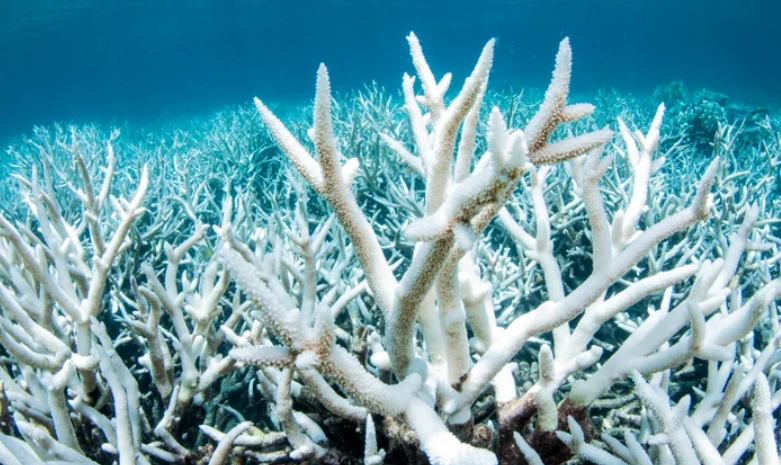
Brisbane, Australia — The Queensland Government’s draft Reef 2050 Catchment Water Quality Strategy has been criticized for lacking concrete actions and sufficient funding to tackle water pollution threatening the Great Barrier Reef. The Australian Marine Conservation Society warns that the strategy is all vision with no real steps or accountability to meet 2030 water quality targets.
Despite two decades of research and policy efforts, the draft pledges only “no net loss” of riparian vegetation, falling short of commitments to reduce sediment pollution that endangers coral and seagrass ecosystems. The Reef has suffered six mass coral bleaching events in nine years, and this year, floods sent river plumes nearly 700 km along the coast, causing significant coral losses. Australia missed 2025 water quality targets by large margins, raising fears of a UNESCO “World Heritage in Danger” listing if urgent action is not taken.
18. Scientists Tap Ocean Cables to Open a Direct Line to Orcas’ Secret Conversations
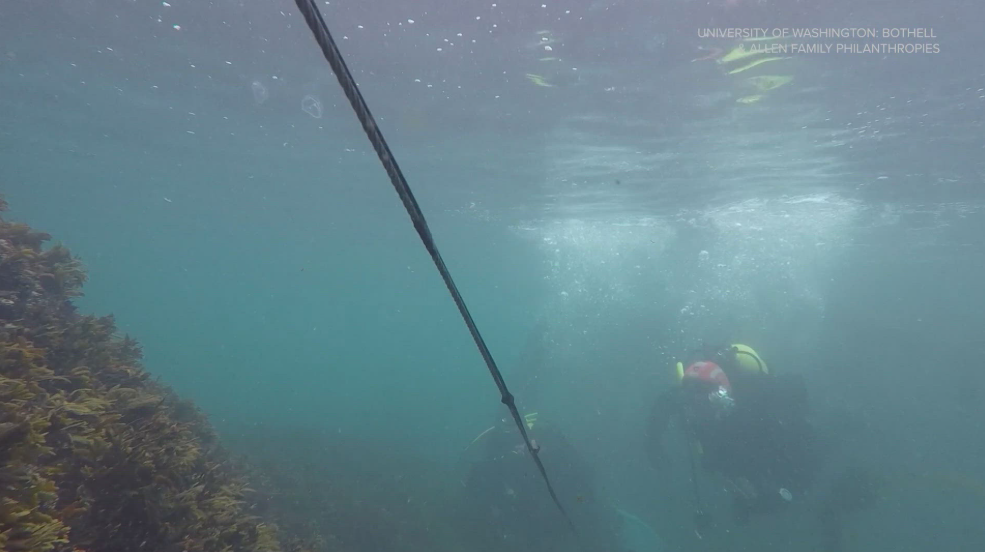
San Juan Island, United States — Scientists have pioneered a game-changing underwater technology that turns existing fiber-optic internet cables into massive underwater microphones. This innovation allows researchers to eavesdrop on orca whales’ clicks, calls, and whistles in real time. Deployed in the Salish Sea, Distributed Acoustic Sensing (DAS) technology offers a vast passive listening network, enabling precise tracking of orca movements and behaviors over large areas.
The technology promises to revolutionize conservation efforts, helping reduce human impacts like ship strikes and noise pollution. By decoding orca communication, researchers aim to better protect these endangered whales and better understand their social interactions. The new system could serve as a model for monitoring marine life globally and improving ocean health management.

19. UK Takes Bold Stand Against Russia’s Secret Mining Plans in Antarctica
London, United Kingdom — In response to a recent Daily Maverick investigation revealing escalating Russian mineral and hydrocarbon prospecting activities in Antarctica, the Westminster government has initiated measures to counter this growing influence. Moscow’s renewed push includes reopening and modernizing the Russkaya Station and constructing a new base with an airstrip for long-range aircraft in Marie Byrd Land, positioning itself alongside Chinese expansion, which raises geopolitical tensions in this environmentally sensitive region.
While currently operating within the Antarctic Treaty’s legal framework, concerns mount over potential exploitation risks and environmental impacts. The UK’s move aims to reinforce protective measures under the Madrid Protocol and promote international cooperation to prevent resource extraction that could worsen climate change and destabilize global environmental governance.
20. California Updates Market Squid Fishery Management Plan to Ensure Sustainability
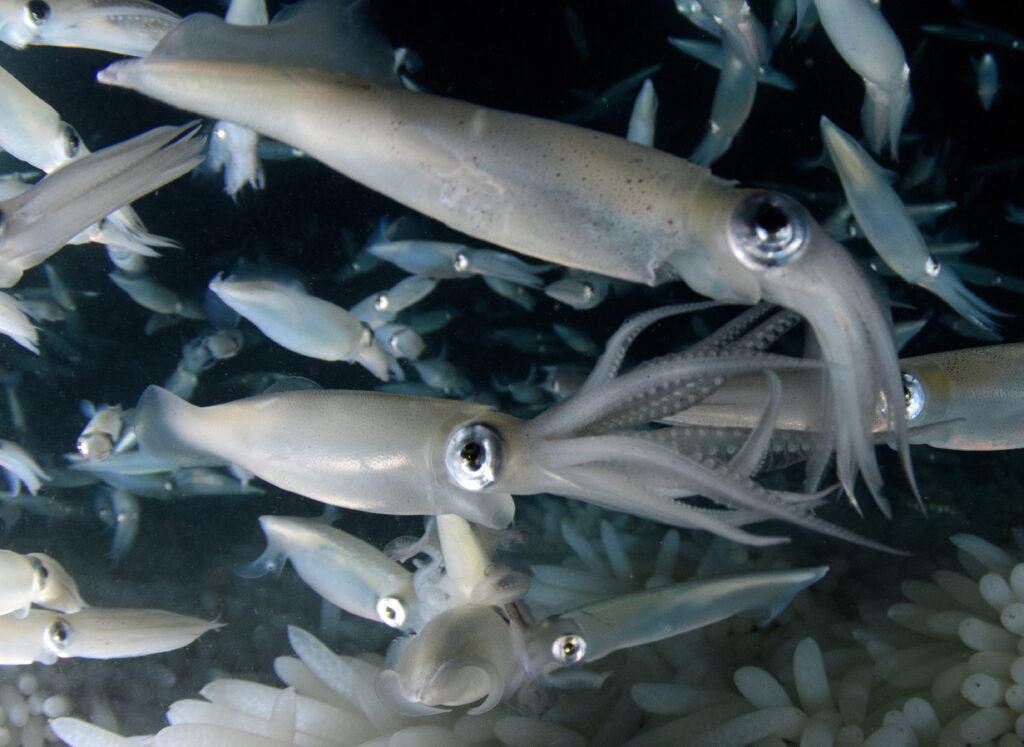
Sacramento, United States — The California Department of Fish and Wildlife (CDFW) is advancing amendments to the Market Squid Fishery Management Plan (MSFMP) to secure the long-term sustainability of this economically vital fishery. The draft amendment, reviewed by a diverse Squid Fishery Advisory Committee including industry, scientists, and NGOs, reflects updated biological data and aims to adapt management to environmental changes and climate impacts.
Key features include seasonal catch limits, weekend closures to protect spawning, gear regulations on light use to safeguard seabirds, and enhanced monitoring via electronic reporting. Market squid landings reached over 126 million pounds in 2024, underscoring its economic and ecological importance. The plan updates will be considered by the California Fish and Game Commission for adoption in August 2025, following public input sessions. The MSFMP aims to balance fishery productivity with ecosystem health and resilience amid changing ocean conditions.

21. How Surfers Turned Protectors Are Saving Mati’s Endangered Sea Turtles
Mati, Philippines — A local group known as Amihan sa Dahican-Balod sa Paglaum, formed from surfers and skimboarders, leads sea turtle conservation efforts on Dahican Beach, Davao Oriental. Transitioning from past dynamite fishing practices, the group now patrols nesting beaches, relocates turtle eggs to hatcheries, and educates the community on protecting endangered sea turtles.
Dahican is a vital nesting ground for three species—green, hawksbill, and olive ridley turtles—all listed as endangered or critically endangered. Despite setbacks like the demolition of their long-standing hatchery in 2024, Amihan persists with coastal cleanup and monitoring activities. Data shows a 700% increase in turtle populations since conservation efforts began decades ago. Protecting these turtles is crucial for maintaining ecosystem balance, supporting local livelihoods, and preserving tourism.
22. From Rubble to Radiance: How Fiji’s Coral Reefs Defied Nature’s Worst Storm
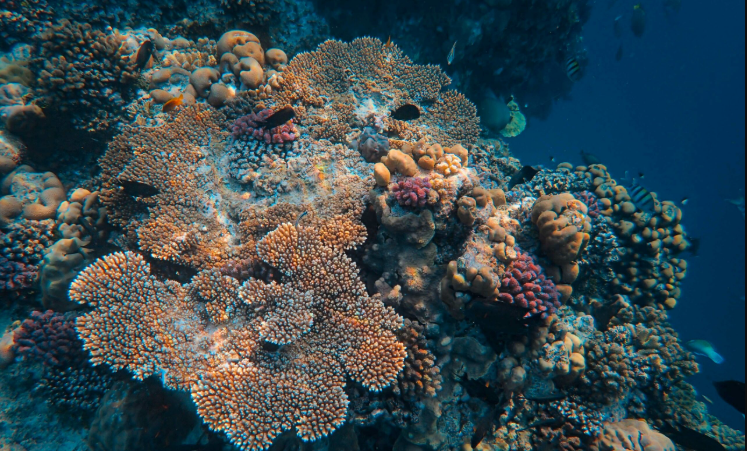
Suva, Fiji — A long-term study led by the Wildlife Conservation Society and the University of the South Pacific reveals that coral reefs devastated by Category 5 Tropical Cyclone Winston in 2016 have rebounded significantly. Researchers tracked 18 reef sites before, during, and four years after the cyclone, documenting a dramatic loss of hard coral cover — up to 91% in some areas — followed by robust recovery by 2020, nearly reaching pre-cyclone conditions.
The recovery is attributed to high connectivity among reefs, substantial herbivorous fish populations, and steady larval supply. Findings highlight the resilience of Pacific reefs and the critical role of local communities and ecosystem-based management in preserving reef health amidst climate change challenges. Fiji’s first National Action Plan for Coral Reef Conservation is being developed to leverage these scientific insights for long-term protection.