

What A Load of Baloney! (Abalone!)
I thought (perhaps naively) the proposal that best showed how trade and conservation can go hand in hand, and demonstrate the power of the CITES convention in aiding countries to protect wildlife was proposal 39, to amend the CITES listing for South African Abalone. Here is why.
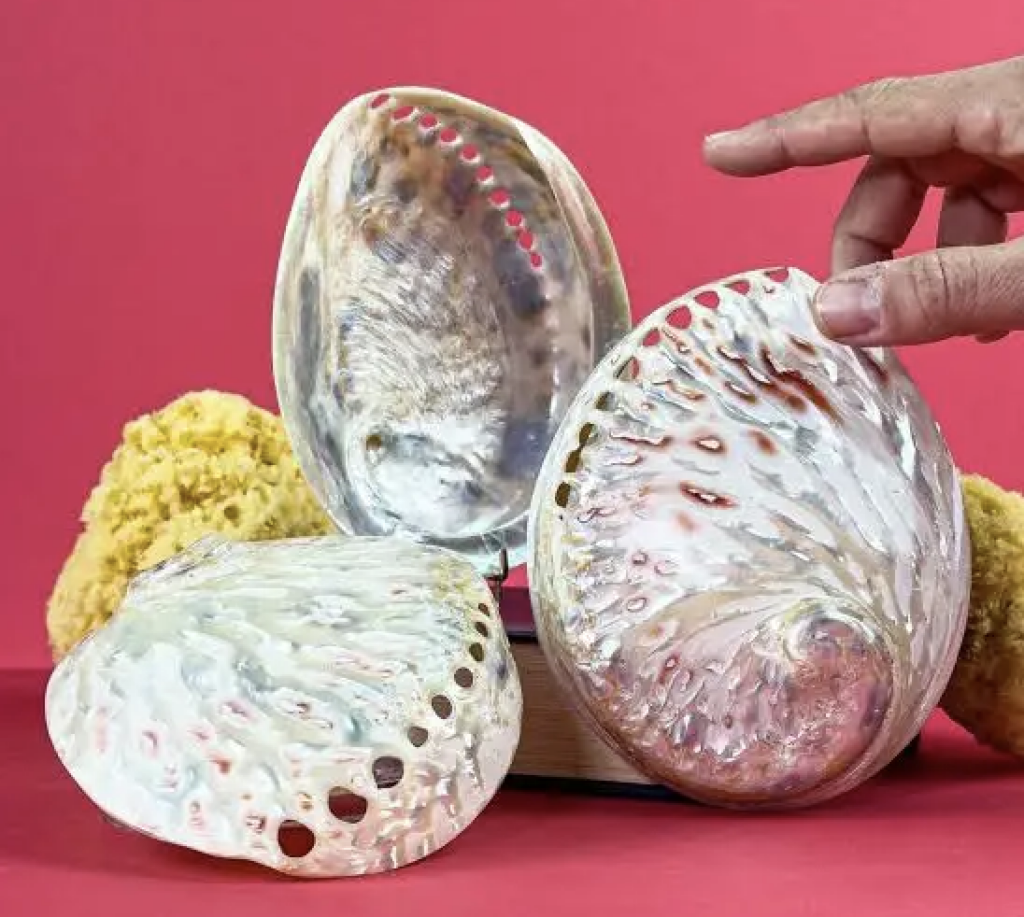
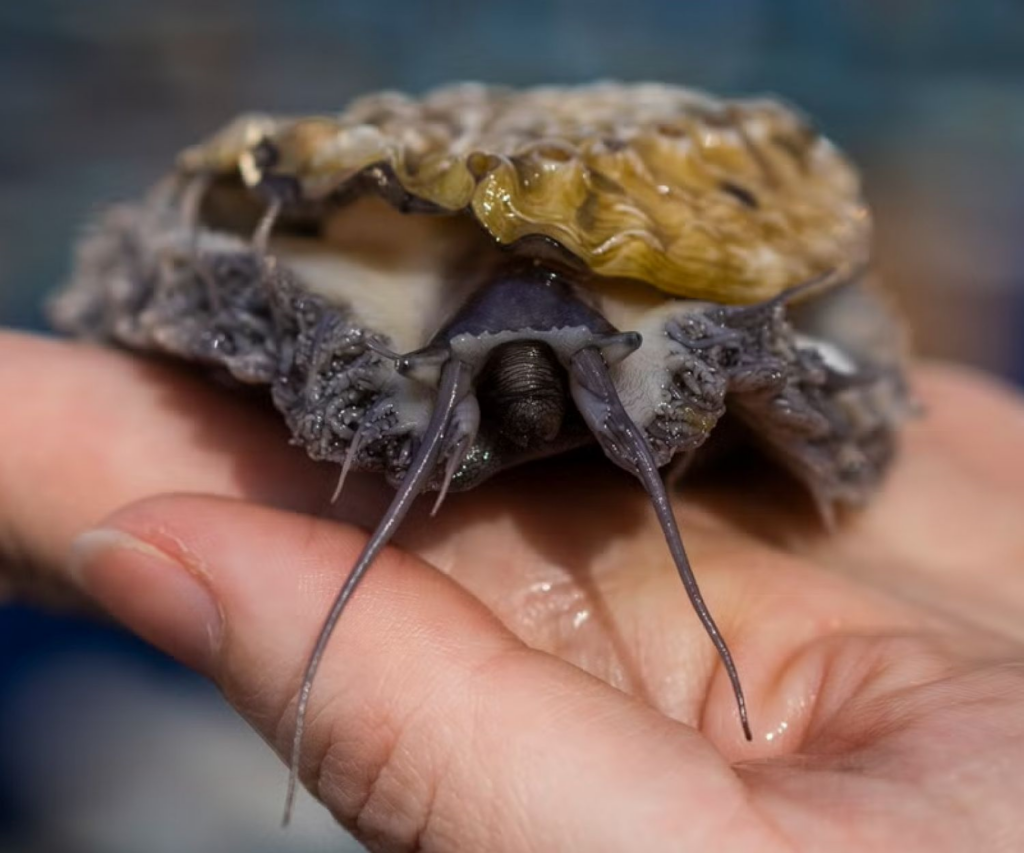
Firstly, have you ever really looked at an abalone? The shell has a row of holes making it look like an artisanal instrument, but the holes are outflow from its gills and a place it can release eggs when the time comes. I think they are really rather endearing, because beneath that shell of the most beautiful metallic, mirror-like pearlescence, a tubby little snail peaks out. It uses it’s muscular foot to grab and pin-down a bit of kelp, and uses its little hard beak to nibble its veggie diet. Through its grazing, this little shellfish is an important gardener, trimming back the kelp, stopping it from over taking the reef, giving a chance to greater biodiversity. My little hero.
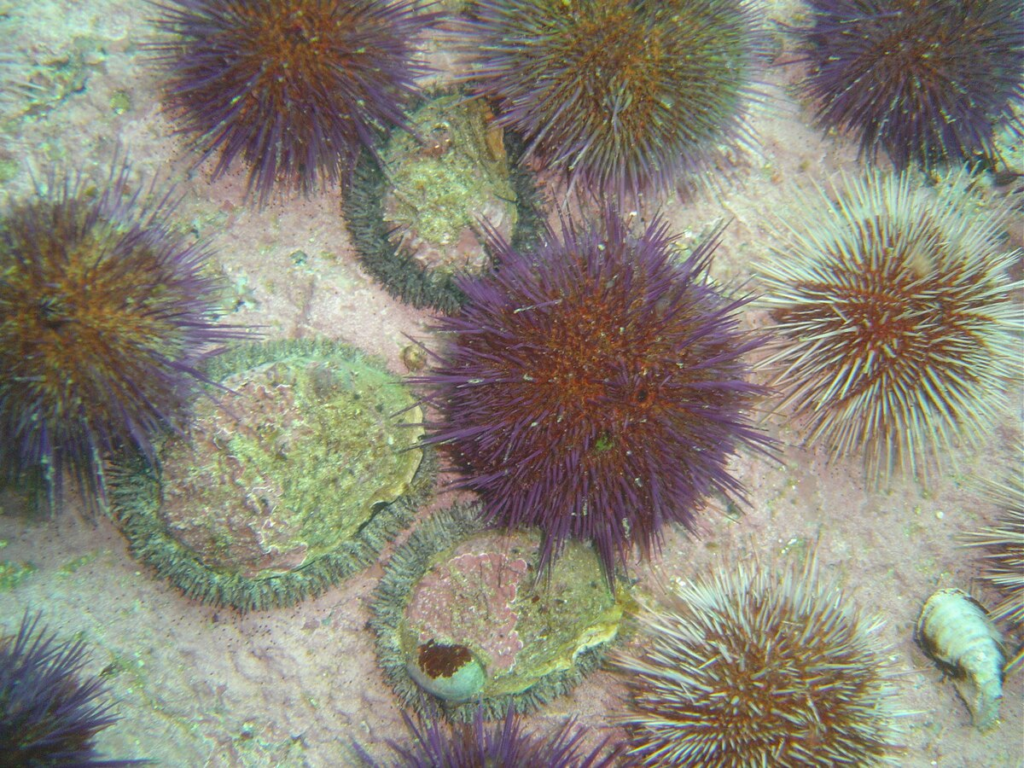
And off South Africa an extraordinary behaviour has been observed. Baby abalone are vulnerable. Just a little meaty mouthful to one of the many predatory fish that lurk in the kelp forests where they live – it’s a jungle out there! But they have any unexpected helping hand. Baby abalone slip up beside a sea urchin, make puppy dog eyes at it, and the sea urchin lets the mollusc slide right underneath. No one is really sure why, but it looks for all the world like the sea urchin adopts the baby, and keeps its protective globe of spines overhead until the abalone is big enough to go it alone. How freakin’ cute!
Ok, maybe I’m already a little biased about Abalone, a sucker for shellfish. So, I was interested in this proposal.
The South African abalone is not doing so well. All over the world abalone have been harvested for millennia, for their beautiful shells used in jewellery and other crafts, and their succulent meaty bodies, a tasty source of protein. But, as with most marine harvest, people have taken too many.
The South African Abalone is an endangered species with a very high risk of extinction. And this little shellfish is slow growing, it can take a decade just to reach minimal harvest size. A slow maturity means it takes a long time to recover.
Because of massive overharvest from the 1950’s onwards, various limits on catches were imposed, but it wasn’t enough. In 2008 the fishery was totally closed. The shellfish are strictly protected. For a while the species was added to CITES Appendix III, which didn’t mean a direct change in protection, but just a period of monitoring the trade. It revealed there is still huge demand for Abalone meat. And so, South Africa established a well-regulated captive breeding industry. They started farming abalone, to supply to the demand, without harming the wild species. Hooray!
However, despite strict laws, poaching is rife. In fact, that’s an understatement. 2-3,000 tonnes of south African abalone are illegal exported by well-organised crime syndicates every year! It’s thought 96 million abalone have been poached in the last decade and now the species’ on the brink.
Here’s the conundrum. The species could be placed in appendix I, banning all trade. But that would harm the well-policed, sustainable and economically important abalone farming industry. Or Appendix II, allowing traceable legal trade.
This CoP South African brought a clever suggestion to the table. Not to place all South African Abalone into Appendix II, but to add it ‘in dried form only’. All of the farmed abalone is exported as fresh, frozen or canned meat. The illegal exports are dried products. This tool would allow sustainable trade to continue and help to stamp-out the poaching.
I thought it was a perfect use of CITES as a pro-trade conservation tool, and a proposal that was sure to go through, but today South Africa withdrew it!
The CITES secretariat called for it to be rejected, because CITES language uses the term ‘specimens’, which is defined as an animal, dead or alive, or any identifiable parts derived from it. So using the existing CITES protocol, to limit the dried trade, South African would also have to start doing export paperwork from the farmed animals, a huge and costly administrative burden, perhaps one that is not economically viable. The commercial abalone industry spoke out, they didn’t want delays in exporting, the extra costs or the huge administrative burden, and the South African government listened.
If the species had been placed on appendix II, South Africa would be obliged to provide Non Detriment Findings, ie proving trade is sustainable. But failure to do so would, under CITES law, force a suspension of trade. And so this proposal has gone. It looks like South Africa is going to return the abalone to Appendix III, where it can be defined as dried parts, to help global traceability alongside new, tighter domestic controls. So hopefully the very last of these beautiful little molluscs can be protected and allowed to recover.
It’s a good example of how conservation and trade tools need constant revision, and new ideas can be put out there, tried and tested, but sometimes to fail. Most of the CoP is discussion, making tiny word changes to documents. It feels boring and time consuming, mind-numbing – but it’s vital. It adds weight to the laws that protect trade and wildlife. Perhaps in future discussions more word changes will allow policies closer to South Africa’s vision.
CITES is complicated, detailed, thorough, and yet also exhilarated and vital. And it’s so important we are here to bear witness, to shine a light on the process and to champion science and the natural world.
Thank you for helping us be a part of this historic conference.
Best wishes,
Phil, Georgienne, Jay, and Tobias
CITES CoP20, Uzbekistan