


1. Robots Culling Lionfish

In Bermuda, a new robot has been unveiled that stuns and captures lionfish at depths that humans can’t dive. “Robots in Service of the Environment” was founded in 2015 to solve the lionfish problem. Lionfish are native to the Pacific and Indian Oceans, but have been introduced to the Atlantic and Caribbean where they are decimating fish from local coral reefs. They eat all the native fish, who do not fear the invader, and they reproduce at a rapid rate. They have no natural predators in those locations.
———————————————–
2. Proof That Fish Larvae Eat Plastic
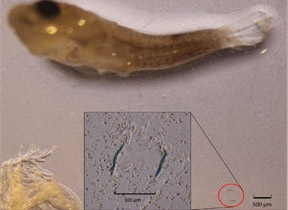 Scientists from Plymouth University have proven that fish larvae eat microplastics and microfibers. Microplastics are plastic fragments that are less than 5mm in size and microfibers come from the washing of synthetic clothes. Both are a problem in the ocean, where animals from the bottom of the food chain ingest these microplastics. It biomagnifies on up the food chain until top level predators, including humans, ingest the plastic along with their food.
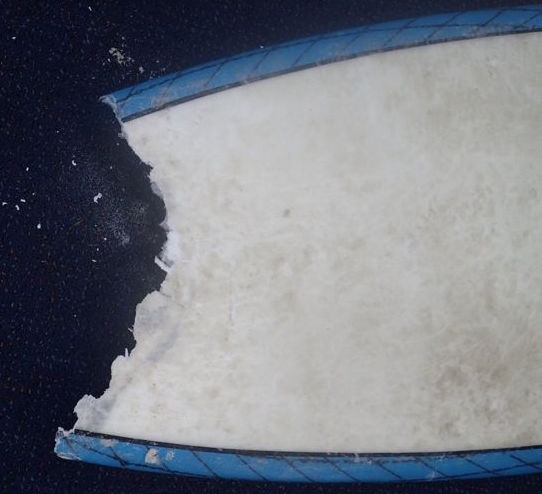
3. Death of Young Woman Spurs Calls for Indiscriminate Sharks Slaughter
———————————————–
4. March for Science – Scientists Collectively Demanding that Research be Used in Decision Making – First Time in History
 The March for Science will take place on April 22, 2017 and is based in Washington D.C. and in 400 locations all around the world. Thousands of scientists and science supporters are expected in a non-partisan “celebration of science and part of a movement to defend science’s vital role in society.” David Kaiser, a science historian at MIT says, “It’s a cluster of issues: cutbacks in basic research across many domains, the censure and censorship regarding data collected by the government or the ability of government scientists to speak, and a range of threats to academic freedom and the research process generally.”
———————————————–
5. Great Barrier Reef Tourism – Can We Have it All?

———————————————–
6. New Worrisome Crack in Greenland Glacier
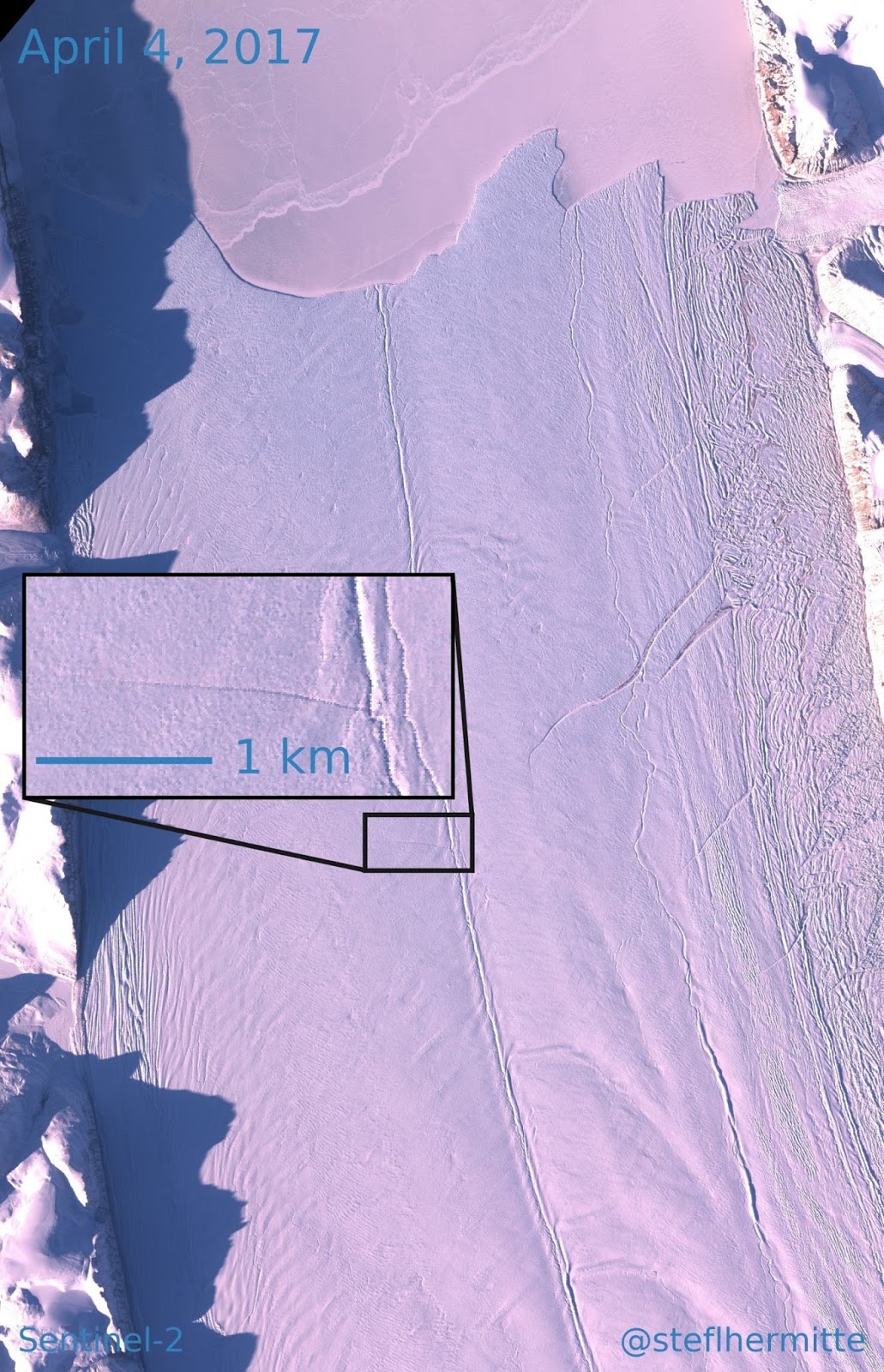 A large crack has been found in one of Greenland’s largest glaciers, the Petermann Glacier. A break is significant because the entire glacier melting could cause a one foot sea level rise. Pieces several times larger than Manhattan has been lost in 2010 and 2012. It is also worrisome because the crack is forming in the middle, when cracks usually form on the sides. The ice breaking off could be 50-70 square miles in size.
———————————————–
7. Sawfish Mating Grounds Found
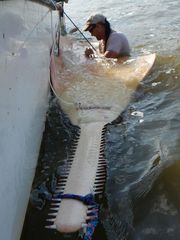 Scientists studying the smalltooth sawfish have found a mating ground in the Everglades of Florida. The area was originally thought to be a pupping ground, but researchers caught sawfish with fresh mating injuries. They used ultrasound and hormones to confirm the females were prepping for pregnancy. The smalltooth sawfish is listed as endangered under the Endangered Species Act.
———————————————–
8. Eels Rely Upon Electromagnetic Field to Navigate

European eels, which are born in the Sargasso Sea, use subtle differences in the Earth’s magnetic field to navigate to their adult freshwater homes off of North Africa and Europe. They hitch a ride there using the Gulf Stream, which they find with their “sixth sense.” Other animals that use electromagnetic fields to navigate include salmon and sea turtles.
Read More…
———————————————–
Sea Save Foundation is committed to raising awareness of marine conservation. The Week in Review is a team effort produced by the Sea Save staff to provide a weekly summary of the latest in marine research, policy, and news.